

Nostalgia Is Not a Strategy, but It Is One Helluva Drug
It's time to get clean.

Hi friends!
A couple of days ago, I googled “Age of Unhingement” because I was trying to find what I said in the New Yorker and, yes, the Google AI search overviews are a menace to society, but, also, that machine nailed it. Go off.
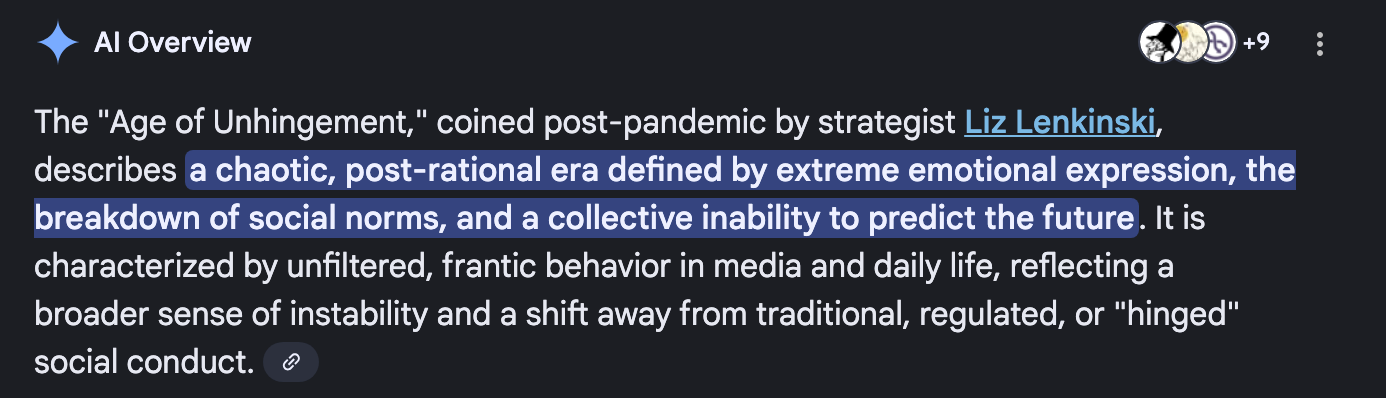
So, if you’re new around here and wondering what I write about, please see above!
As anyone lucky enough to visit a social media app in 2026 can attest, the year 2016 was recently summoned from its shallow grave to haunt us. I understand the urge to look back as everything gets exponentially more … uh … yeah, and, holy shit, it’s been a decade since then, and we’re inventing new ways to mark time since it makes less and less sense, but the hive mind needs to take off its rose-colored clout goggles. True heads know — with Trump’s first election win and algorithms taking control of our feeds — 2016 was the dawn of the Age of Unhingement™.
I think 2010, a nice, round number, is a better year to pick if we must revisit the near-ish past sentimentally. We were in Obama’s first term and starting to come out of the Great Recession. The future was imperfect, but it felt like a fresh page to be written. 2010 was also an inflection point in social media reshaping reality; the front-facing iPhone camera was born, announced by Steve Jobs in June, and the first version of Instagram was released that October. We were connected through our phones, but we didn’t experience life through a screen; we weren’t taking or posting videos, and most of our uploading was still done on desktop long after we lived in the moment.
I have a soft spot for 2010, because the first week of that year, Blackberry in hand, I left Toronto, my hometown, and moved to New York City. I had just turned 24, and even though it was the dead of winter, I felt like someone unplugged my life and plugged it back into a socket with higher voltage. By day, I was in grad school, working on my Masters in Media Studies, reading and writing about ideas that titillated me intellectually. By night, I was taking a second graduate degree at Vodka Soda with Lime University.
At Vodka Soda with Lime University, I very quickly made a lot of friends who loved drinking as much as I did. Since we were all in grad school and had no money, we would go drink at open bar parties we found on a brilliant website, my open bar dot com, that told us where we could go drink for free. Then, we would see where the night took us. It was often the roof of the Standard hotel because we knew the bouncer and he always let us cut the line.
That summer was objectively the most fun I’ve ever had in my life.
By September, I had three friend groups going — two groups of party friends that overlapped, and a group of more wholesome girlfriends. We all intersected on “Fashion’s Night Out,” a bizarre scheme from Anna Wintour to get people shopping again because the economy had just crashed. I can’t imagine it worked, but it was very fun to go on a fashion-themed bar crawl in the Meatpacking District. Liquor companies were floating so much free booze around New York during those pre-influencer “tastemaker” days of digital culture that I honestly don’t know how any of us who lived and drank through it has a functioning liver.
On “Fashion’s Night Out,” while drinking in a random clothing store, one of my wholesome girlfriends was shocked to see that I was friendly with a ’90s supermodel. I knew her because we were both regulars at a weekly Monday DJ night at an Italian restaurant on Stanton Street where my best friend Vicky’s boyfriend, Fabrizio, was the bartender. And on that beautiful, messy night of fashion, not only did I have A TIME AND A HALF, I achieved the dream of the ‘00s and got asked to have my picture taken for a street style roundup.
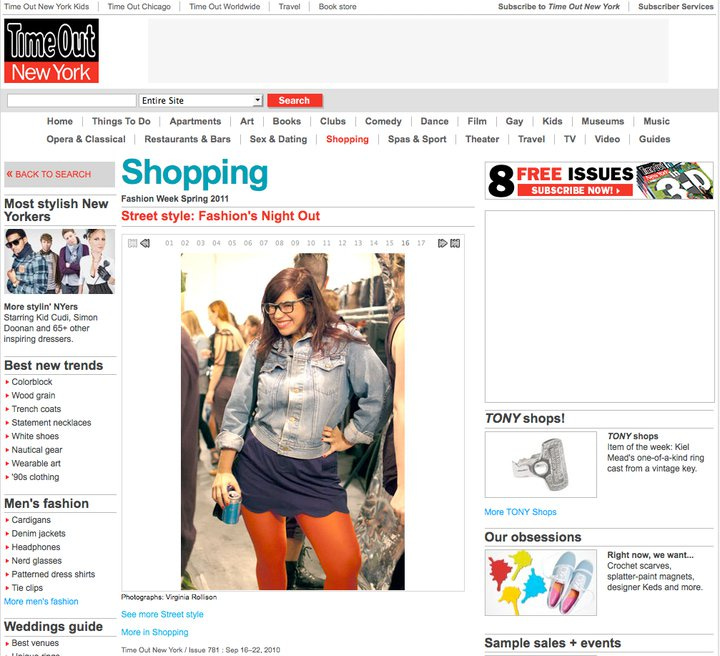
I was young, I was having fun, and people wanted to take my picture. If I were insane, I would look back on that time and feel nostalgic. But I’m not insane anymore, so I can be honest with myself and with you — when I was in my 20s, I was terrified of life and constantly hungover.
I flew high during the summer of 2010, but five years later, when I was working a job I hated, burnt out, and still drinking that much, my life was much smaller and lonelier. I eventually fled New York in an act of self-preservation.
Little 24-year-old me had great ideas of what she might like to do with herself after grad school but didn’t yet know how one thing leads to the next. While I don’t want to go back and relive my 20s, I do wish I could let that version of me know that it would all work out. I spent a lot of time spiraling about my career prospects, which, in hindsight, makes sense. Nothing I ended up doing had been invented yet.
I have lived in America since 2010, but I wasn’t born here. I was born in Canada, a country that produces an outsize number of thinkers and artists who are able to lucidly comment on American insanity because we have the perfect observation deck, or, as Robin Williams once joked, “a really nice apartment over a meth lab.”
Margaret Atwood started writing The Handmaid’s Tale when she was living in Berlin and finished it when she held an MFA Chair in Tuscaloosa, Alabama, but I can’t imagine she could have written such an enduring work of speculative fiction if she hadn’t grown up in Ontario and Quebec, watching American dystopia unfold from a perch.
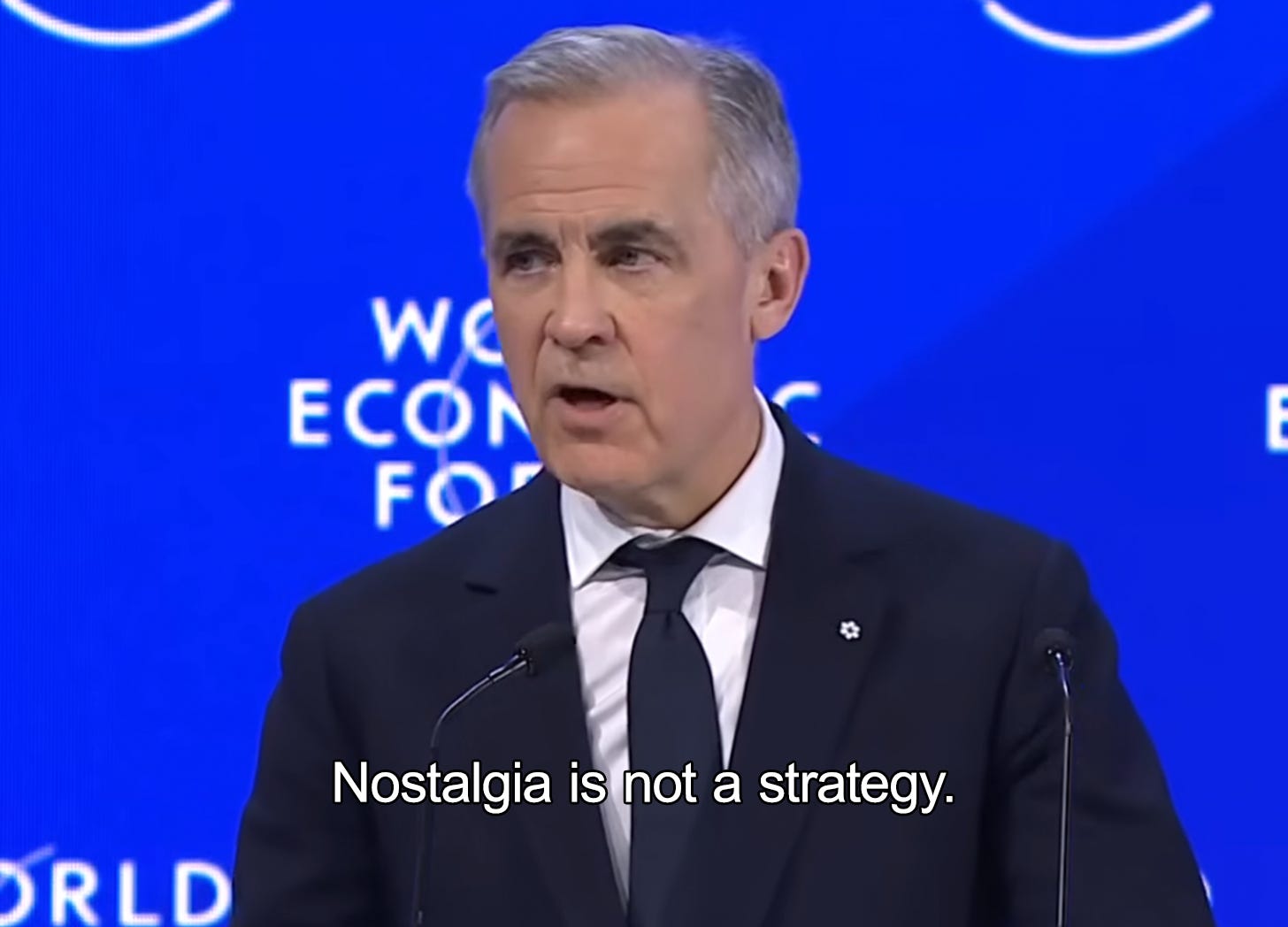
When Canadian Prime Minister Mark Carney boldly delivered his honest assessment of our current geopolitical reality, he was in the pocket not only because the Davos boys’ club is his scene — he’s an economist and banker by trade used to addressing his fellow elites at forums and summits — but also because Canada does not have the geographical distance to buffer what’s unfolding in America. If the meth lab explodes the apartment goes with it.
Carney never held political office before he was elected last April. He was governor of the Bank of Canada and then the Bank of England. His perspective feels different from other world leaders because it is. Like all politicians, he is imperfect, but his willingness to plainly and eloquently end capitulation to Trump filled a vacuum in world leadership.
In the binary world of American politics, nostalgia crosses the aisle. The Democrats live frozen in time, comfortably tied to rules of conduct from less violent and lawless eras. The Trump-led Republicans openly try to make America “great again,” a phrase that has always been a dog whistle for white supremacy, the return of which went so unchecked that children are now snatched in broad daylight and resisters shot point blank.
My feed is full of good-hearted (white) Americans watching fascism unfold in horror, posting some version of “this isn’t America.” But it is. And it always was. America’s systemic racism against Black people, and the notion of “Manifest Destiny” that justified the brutal displacement of Native Americans, inspired Hitler and the Nazis who drew upon the Jim Crow laws of the American South to segregate Jews in the 1930s. Looking at the past through a Vaseline-smeared lens and ignoring America’s long history of enslavement, racial violence, and legal segregation is why we’re here again.
In 2016, America still had a Black president.
In 2026, the hoods are off and the masks are on.
Honesty is a strategy that directly combats insanity. We all crave it, we all need it, and it’s healing for everyone involved. It’s rare and magnetic in our bullshit-ridden world, and you don’t need to be standing on the world stage to implement it. We may no longer have cohesive truth, but honesty is not a group project, it’s a personal choice. The best place to start is actually in your own life.
The past is gone and it’s not coming back to save us.
The present holds no solace and we all want to escape it.
The next trend is working toward a better future and making it contagious.
Less Lessons More Blessin’s™
Liz
Brilliant! Needed the salve after two horrendous weeks. Thank you from CA.
This was a great read!